
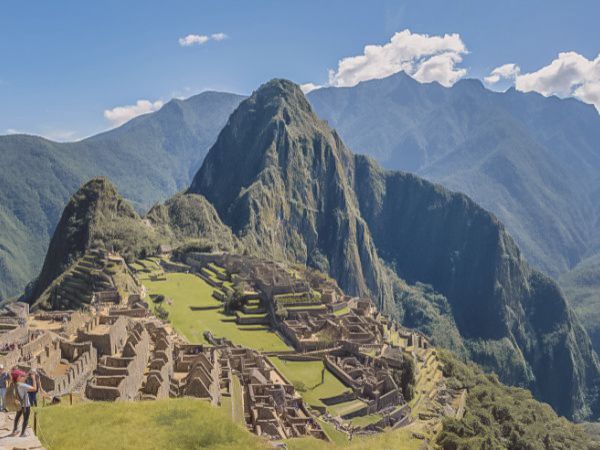
The feeling you experience when visiting Machu Picchu is indescribable. It is one of the top tourist attractions in Peru, welcoming thousands of visitors from around the world; however, do you know how and by whom this wonder was discovered?
Who was Hiram Bingham?
Hiram Bingham was a Hawaiian-born politician and professor, born on November 19, 1875. He was passionate about Latin American history and also had a political career in Connecticut. His wife inherited a large fortune, which was later invested in his expeditions across South America.
Passion for history and adventure in Peru
During his first trip to South America, Yale University professor Hiram Bingham aimed to explore hidden lands beyond the Andes. He had heard about the “Lost City of the Incas, Vilcabamba” and was determined to find it. In 1910, he organized the Yale Peruvian Expedition.
A long journey
In July 1911, Hiram Bingham and his team arrived in Peru, where they met Sergeant Carrasco, who had heard about impressive archaeological remains in Cusco. He joined the team as an interpreter. Upon arriving in Cusco, they gathered pack animals and supplies to begin their long journey. Despite many difficulties along the way, they reached Ollantaytambo and Urubamba, both part of the Sacred Valley of the Incas.
On July 23, the team arrived at Mandor Pampa, where they met a kind local man, Mr. Melchor Arteaga, who told them that nearby lands contained ruins left by his ancestors. This place was called Machu Picchu, which in Quechua means “Old Mountain.”
At dawn on July 24, the expedition began the hike to Machu Picchu. However, due to rain and difficulties, the Yale team decided to stop. Nevertheless, Hiram Bingham, determined to achieve his goal, continued alongside Sergeant Carrasco and Mr. Melchor Arteaga. Along the way, they encountered a humble family sheltering from the rain. The family explained that they were farmers and that many of the agricultural terraces were still in use.
Hiram Binggam discovers Machu Picchu
After speaking with the local family and obtaining more information about Machu Picchu, the family allowed their young son to guide the explorers. The boy, Pablo Racharte, joined the expedition. After a long hike, Bingham described seeing something unexpected: a set of archaeological structures built with finely carved stone. He noted the height and precision of the walls and realized he was witnessing something extraordinary. At that moment, Hiram Bingham understood that he had discovered a site of great historical importance and what he believed to be the last inhabited Inca city.
Machu Picchu to the world and the great controversy
After discovering Machu Picchu, Bingham worked to secure funding for further research. He gained support from the Peruvian government, Yale University, and the San Antonio Abad University of Cusco. In the following months, National Geographic published an article announcing the discovery, generating great public interest.
In the following years, doubts arose about whether Hiram Bingham was truly the first to discover Machu Picchu. This was because nine years before his arrival, Mr. Agustín Lizárraga had reportedly visited the site and carved his name into the stones. Bingham acknowledged this fact, but his expedition remains highly significant because it led to formal excavations and scientific research.
Was Machu Picchu the last Inca refuge?
In the years following the discovery, various studies were conducted. It was eventually determined that Machu Picchu was not the last refuge used by Manco II before confronting the Spanish invaders. However, Hiram Bingham died believing his theory. Research now suggests that Machu Picchu was a royal retreat of the ninth Inca ruler, Pachacútec, a place unknown to the invaders, likely due to its remote and difficult geography.